
With gratitude, we acknowledge that the University of British Columbia Faculty of Medicine and its distributed programs, which include four university academic campuses, are located on traditional, ancestral and unceded territories of First Nations Peoples and communities around the province.
- We respectfully acknowledge that the UBC Vancouver-Point Grey academic campus is located on the traditional, ancestral, unceded territory of the xʷməθkʷəy̓əm (Musqueam), and UBC operations in Vancouver more generally are also on the territories of the Skwxwú7mesh (Squamish) and səl̓ilwətaɁɬ (Tsleil-Waututh).
- We respectfully acknowledge that the UBC Okanagan academic campus is situated on the traditional, ancestral, unceded territory of the Syilx Okanagan Nation.
- We respectfully acknowledge that the University of Northern BC Prince George campus is located on the traditional territory of the Lheidli T’enneh, who are part of the Dakelh (Carrier) First Nations.
- We acknowledge and respect the lək̓ʷəŋən peoples on whose traditional territories the University of Victoria is located and the Songhees, Esquimalt and W̱SÁNEĆ peoples whose historical relationships with the land continue to this day.
- We recognize that every member of the UBC community has benefited from, and continues to benefit from, the use and occupation of this land since the institution’s founding. We have a responsibility to acknowledge and make visible the university’s relationship with Indigenous peoples.
Learn more about the Faculty of Medicine’s commitments to reconciliation ↗
Our Vision
The UBC Department of Medicine strives to cultivate a teaching, learning and working environment that is equitable, accepting, inclusive and free of discrimination and harassment. In conjunction with the University of British Columbia and the Faculty of Medicine, the UBC Department of Medicine works to bridge gaps in equity within the Department by identifying principal concerns, developing equity guidelines, and educating division heads and directors. We work to ensure equitable hiring practices by raising awareness, broadening candidate pools and standardizing candidate selection methods. We promote and support professional development and networking opportunities for all of our faculty and trainees. We integrate equity principles into our training programs and academic activities by engaging our educational program directors in equity initiatives.
In order to move towards greater Equity, Diversity and Inclusion (EDI), we recognize the need for change at the individual, interpersonal and systemic levels. As individuals, we may hold beliefs and take actions that hurt and exclude particular groups that are different than the ones we belong to. Discrimination and harassment can occur between two (or more) people during a particular interaction. However, inequities along intersecting axes of race, class, gender, sexuality, and ability are also built into our systems, perpetuating the privileges enjoyed by some and the marginalization experienced by others. One of the most important examples of this in our setting is how colonial ways of knowing and methods of care and control are woven into our medical system and medical school to perpetuate the harms experienced by Indigenous people. It is imperative that we work to create change at the systemic level, which will have a significant impact on change at the individual and interpersonal levels.
What is EDI?
Equity, Diversity and Inclusion (EDI) is an aspiration and a goal that requires us to undertake a process of learning and unlearning and ongoing action. Although we can identify EDI principles to guide us in this process of learning and unlearning and our actions, EDI is something that we must continually work toward rather than an outcome that we can check off as completed.
To move toward greater EDI, we must learn about how privilege and marginalization occurs along intersecting axes of race, class, gender, sexuality, and ability to produce inequities in our health system, medical school, and university, and take action at the individual, interpersonal, and systemic levels. We need to learn about and work to dismantle structures in society like white supremacy, cis-heteropatriarchy, and ableism, striving to be anti-racist, anti-oppressive, gender and sexuality affirming, and accommodating. We also need to unlearn colonial ways of knowing that elevate certain kinds of knowledge and expertise and denigrate others, working to redress the harms of the past that continue to reverberate into the present.
What are we learning and unlearning from?
- Aldred, T (2023). Speak-up culture = feedback culture. BC Medical Journal (65) 1. https://bcmj.org/editorials/speak-culture-feedback-culture
- CBC’s Landback podcast: https://www.cbc.ca/listen/cbc-podcasts/1341-landback
- Crackdown podcast (produced by and with people who use drugs): https://www.crackdownpod.com/
- Canadian Public Health Association’s Language Matters: Using Respectful Language in relation to sexual health, substance use, STBBIs and Intersecting Sources of Stigma Report: https://www.cpha.ca/sites/default/files/uploads/resources/stbbi/language-tool-e.pdf
- Permission to exist: CMAJ 2025 November 24:197:E1349-50
What are we doing?
Read the latest REDI news from the UBC Department of Medicine, including relevant events, initiatives, and updates from related departments, faculties across the university, and partner health authorities.
-

Register Now: iCON-VCH Indigenous Health Round on September 29, 2026
-
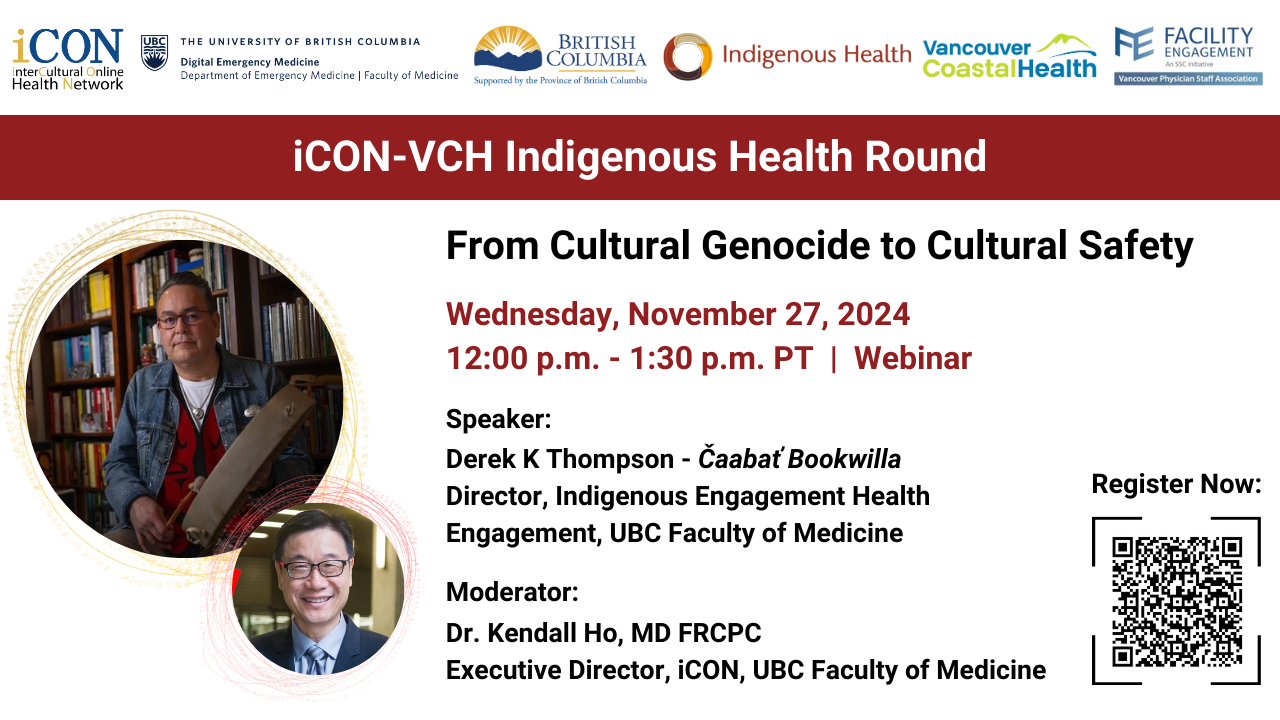
Register Now: iCON-VCH Indigenous Health Round on November 27, 2024
-
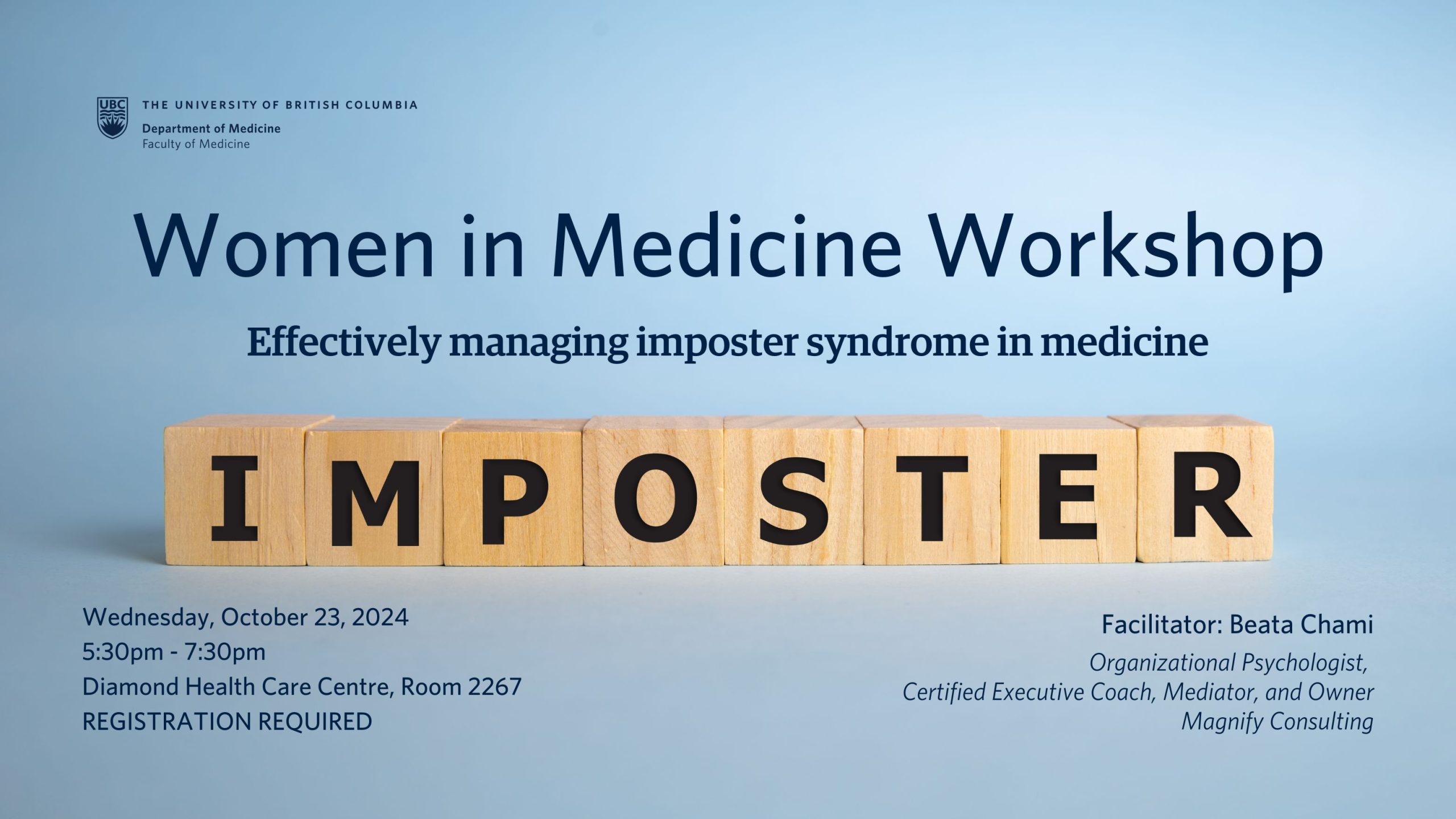
Women in Medicine Workshop: Effectively managing imposter syndrome in medicine with Beata Chami
A call for students and faculty to get involved
Are you a student, staff, or faculty member who wants to get involved in Equity, Diversity and Inclusion (EDI) initiatives and actions in the Department of Medicine? We’d like to hear from you. Use the online form below to submit feedback, suggestions, or other ideas to the Department of Medicine.
If you have specific concerns or questions regarding EDI in the Department of Medicine, please contact:
- Your Hospital Division Head
- Your UBC Division Head
- UBC Department of Medicine Human Resources
- Head, UBC Department of Medicine
If you have experienced discrimination and harassment on campus, have been accused of committing discrimination and harassment, or have an equity-related query, please contact an Equity Advisor for assistance by calling 604-882-6353. They will meet with you on a confidential basis to help evaluate your situation and explore possible solutions with you.
UBC Faculty of Medicine Office of Respectful Environments, Equity, Diversity & Inclusion (REDI)
317 – 2194 Health Sciences Mall
Vancouver, BC Canada V6T 1Z3
T: 604-827-3664
email: redi.office@ubc.ca
UBC Equity & Inclusion Office
2306 – 1874 East Mall (Brock Hall)
Vancouver, BC V6T 1Z1
T: 604-822-6353
F: 604-822-3260
email: equity@equity.ubc.ca
Would you like to gain a deeper understanding and more clarity around EDI language?
Our glossary is here to help. It’s filled with clear definitions and helpful links to further reading / watching / listening that will allow you to explore EDI principles in more depth and gain a better understanding.
Glossary
2S/LGBTQIA+
An acronym that stands for Two-Spirit, Lesbian, Gay, Bisexual, Transgender, Queer/Questioning, Intersex, and Asexual. A plus sign indicates the inclusion of sexual orientations and gender identities not explicitly included in the acronym.
Further Reading:
- Suen, L. W., Lunn, M. R., Katuzny, K., Finn, S., Duncan, L., Sevelius, J., Flentje, A., Capriotti, M. R., Lubensky, M. E., Hunt, C., Weber, S., Bibbins-Domingo, K., Obedin-Maliver, J. (2020). What sexual and gender minority people want researchers to know about sexual orientation and gender identity questions: A qualitative study. Archives of Sexual Behavior, 49, 2301-2318.
- The Care We Dream Of: Liberatory and Transformative Approaches to LGBTQ+ Health, a book by Zena Sharman
Ableism
Discrimination or exclusion based on conscious or unconscious beliefs that people with disabilities are less valuable, and therefore less able to contribute and participate in society. Ableism may be embedded in institutions and can limit opportunities and inclusion of persons with disabilities in community and corporate life.
Language matters. Calling someone “crazy” because they’ve done something outlandish, odd, or unacceptable is one example of casual ableism that makes light of mental illness.
Spaces that are physically inaccessible is another form of ableism commonly faced by disabled people.
Ablesplaining
Refers to the tendency of some abled people to assume they know more about a disabled or chronically ill person’s health than the person does themselves.
Often involves unsolicited advice from able people directed towards disabled people.
Accommodation
Adjustments made to policies, programs, practices, facilities, or resources to allow for equitable access in the workplace. Accommodations are made in the hopes of improving accessibility by eliminating existing barriers.
Employers, organizations, service providers, and public institutions’ legal obligation to provide accommodations to individuals for equitable access, so long as the accommodation is reasonable.
Accessibility
A building, facility, structure, program, activity, resource, product etc. that is readily usable, or the extent to which it is readily usable by a person with a disability.
Ageism and Adultism
Ageism refers to discrimination or exclusion based on age.
Adultism refers to the discrimination or exclusion of young people based on the belief that younger people are less valuable or less capable.
Ally and Allyship
Ally, a word rooted in the term “alliance”, refers to an individual in a position of privilege or power who makes consistent efforts to understand, uplift, empower, and support equity-deserving groups. An ally is not a member of the group but seeks to stand in solidarity with an equity-deserving group to end oppression, discrimination and prejudice.
Allyship refers to an active and continuous effort to unlearn oppressive ideas and work to support and advocate for oppressed groups and identities.
Further Reading:
- Indigenous Ally Toolkit, a resource from the Montreal Urban Aboriginal Community Strategy Network.
Anti-Oppressive Health Care Practice
As defined by Lena Dominelli, anti-oppressive health care practice embodies a person-centered philosophy; an egalitarian value system concerned with reducing the deleterious effects of structural inequities upon people’s lives; a methodology focusing on both process and outcome; and a way of structuring relationships between individuals that aims to empower users by reducing the negative effects of hierarchy on their interaction and the work they do together.
Anti-Semitism
A certain perception of Jews, which may be expressed as hatred toward Jews.
Rhetorical and physical manifestations of antisemitism are directed toward Jewish or non-Jewish individuals and/or their property, toward Jewish community institutions and religious facilities.
Anti-racism
The deliberate, active opposition to racism and racial inequities. It involves recognizing and challenging racism at the individual, interpersonal and systemic levels.
Antiracism promotes equity and justice by advocating for policies, practices, and actions that confront and eradicate racism in all its forms. It involves not only speaking out against racism but also actively working towards creating an equitable, diverse and inclusive society where all individuals are treated with dignity and respect, regardless of their racial and ethnic background.
Further Reading and Watching:
- The difference between being “not racist” and antiracist, a TED Talk by Ibram X. Kendi.
- How to Be an Antiracist, a book by Ibram X. Kendi.
- Key public health resources for anti-racism action: A curated list, a resource list by the National Collaborating Centre for Determinants of Health.
- Crear-Perry, J., Maybank, A., Keeys, M., Mitchell, N., Godbolt, D. (2020). Moving towards anti-racist praxis in medicine. Lancet, 396(10249), pp. 451-453.
- Solomon, S. R., Atalay, A. J., Osman, N. Y. (2021). Diversity is not enough: Advancing a framework for antiracism in medical education. Academic Medicine, 96(11), pp. 1513-1517.
- I Know Why the Caged Bird Sings, a book by Maya Angelou
- Black Feminist Thought, a book by Patricia Hill Collins
- Eloquent Rage: A Black Feminist Discovers Her Superpower, a book by Dr. Brittney Cooper
- The Combahee River Collective Statement – The Combahee River Collective
- Black Feminism & the Movement for Black Lives, a panel with Barbara Smith, Reina Gossett and Charlene Carruthers
Aromantic
Someone who experiences little to no romantic attraction to others and has little to no interest in romantic relationships. Aromanticism exists on a spectrum and can fluctuate. It is sometimes shortened to Aro.
Asexual
Someone who experiences little to no sexual attraction to others and has little to no interest in sexual activity or sexual relationships. Asexuality exists on a spectrum and can fluctuate. It is sometimes shortened to Ace.
Bias
Bias refers to conscious (explicit) or unconscious (implicit) opinion, preference, prejudice, or inclination, formed without reasonable justification, that prevents a balanced or even-handed judgement.
Implicit bias occurs outside of our awareness.
BIPOC
Black, Indigenous, and People of Color.
People of Colour (PoC) is widely used as an umbrella term for all people of colour, but BIPOC is a term that acknowledges that not all people of colour face equal levels of injustice.
BIPOC recognizes that Black and Indigenous people are severely impacted by systemic racial injustices.
Biphobia
Fear, dislike, or hatred of and discrimination against bisexual people. Biphobia presents through offensive jokes, exclusion, bi erasure, harassment, and violence. Biphobia exists both within and outside of the 2SLGBTQI+ community.
Black Lives Matter
An ideological and political movement founded in 2013 in response to the acquittal of Trayvon Martin’s murderer. Black Lives Matter Global Network Foundation is a global organization in the US, UK, and Canada, whose mission is to eradicate white supremacy and incidents of racially motivated violence against Black people. By combating and countering acts of violence, the movement intends to create space for Black imagination and innovation. BLM gained global prominence in 2020 following George Floyd’s murder, and to this day BLM continues to advocate for Black Lives.
Further Watching:
- Black Feminism & the Movement for Black Lives, a Panel by Barbara Smith, Reina Gossett and Charlene Carruthers.
Bystander versus Upstander
A bystander is a person who witnesses an incident but does not intervene or otherwise take part.
An upstander is a person who takes action in support of another person or cause or who intervenes in situations of bullying or violence.
Cisgender
A term that describes someone whose gender identity aligns with the sex assigned to them at birth. The term is often shortened to “cis”.
Cisheteropatriarchy
A socio-political system in which cis-gender men and heterosexuality have privilege and dominance over other genders and over other sexual orientations.
In this system, patriarchy and heterosexuality are seen as the societal “norm.”
Cisnormativity
The assumption by individuals or society that everyone is cisgender, that cisgender is the default, “normal”, or superior.
Classism
Discriminatory practices and biases based on socioeconomic status. It involves treating individuals differently or devaluing them based on their economic background, often resulting in the marginalization or disadvantage of those in lower socioeconomic positions.
Classism can manifest in various ways, such as unequal access to opportunities, limited social mobility, and systemic disparities in education, healthcare, employment, and housing.
Colonialism and Settler Colonialism
Colonialism refers to the practice of domination where one nation occupies land for the purpose of subjugating, conquering, and exploiting the colonized territory and its people.
During this process, colonizers may impose religious and cultural practices on the Indigenous population.
Settler colonialism refers to the long-term forced physical occupation of lands by a non-Indigenous population. Settler colonialism involves the imposition of the colonizer’s identity including their language, culture, and religion while erasing the identity of the colonized people.
The practices and harms of colonialism and settler colonialism continue into the present. In what is now known as the country of Canada, these harms include the significant health disparities and rates of death experienced by Indigenous people.
Further Reading, Watching, and Listening:
- Reconciling History, a presentation by Dr. Cindy Blackstock to the University of Ottawa Faculty of Medicine.
- 21 things you may not know about the Indian Act, a book by Bob Joseph.
- Trust, truth and treaties (ep 276), an audio podcast by Media Indigena.
- Separate beds: A history of Indian hospitals in Canada, 1920s-1980s, a book by Maureen K. Lux
- Turpel-Lafond M. E., Johnson H. (2020). In Plain Sight: Addressing Indigenous-specific racism and discrimination in BC health care. Government of British Columbia.
- National Inquiry Into Missing and Murdered Indigenous Women and Girls. Reclaiming Power and Place: The Final Report of the National Inquiry into Missing and Murdered Indigenous Women and Girls.
Colourism
The discriminatory practice of preferring people with fair or lighter skin over dark skin. Colourism/shadism is based on European beauty standards and is rooted in racism. Also practiced within racial and ethnic groups.
Critical Race Theory (CRT)
An intellectual movement and framework used to analyze policies, practices, institutions, and systems to uncover the ways that they create and maintain racial inequality. CRT asserts that racism is an everyday experience for people of colour, race is socially constructed for the purpose of oppression, institutions are inherently racist, and society is largely uninterested in remedying institutional racism.
Further Reading:
- Ford, C. L., Airhihenbuwa, C. O. (2018). Commentary: Just what is Critical Race Theory and what’s it doing in a progressive field like public health? Ethnicity and Disease, 28(1).
Cultural Appropriation
The theft of cultural elements or objects from equity-seeking groups for use, commodification, or profit without understanding the cultural significance and historical context.
Cultural appropriation trivializes historical and ongoing oppression. Often, the result of cultural appropriation is appreciation for select cultural elements of an oppressed group, whilst prejudice against that group runs rampant. For example, elements of BIPoC culture (e.g., styles of dress or music) become “cool” when undertaken by white folks, but continue to be viewed as “primitive” or even “threatening” when undertaken by BIPoC folks.
Cultural Competence
The ability to understand, appreciate, and interact with humility with individuals from different cultures and backgrounds. It involves developing awareness of one’s own biases and adapting behaviors and practices to ensure inclusive and respectful interactions.
Further Reading:
- Thackrah, R. D., & Thompson, S. C. (2013). Refining the concept of cultural competence: building on decades of progress. Medical Journal of Australia, 199(1), 35-38.
Cultural Humility
A commitment to self-reflection, lifelong learning, mitigating power, and institutional accountability by accepting personal limitations and increasing self-awareness of biases and misperceptions to build relationships.
Cultural Safety
An outcome based on respectful engagement that creates a physically, socially, emotionally, and spiritually safe environment without challenge or denial of an individual’s identity or needs.
As we work towards this, individuals from diverse cultural backgrounds feel safer, more valued, and better able to express their identities and needs.
Cultural safety goes beyond cultural awareness, emphasizing ongoing self-reflection and actively challenging historical injustices, power imbalances and systemic inequities.
Further Reading and Watching:
- Connecting Indigenous Cultural Safety & Addressing Racism in the Health Care System, a presentation by Harley Eagle.
- Transformative Change: Advancing Cultural Safety Across British Columbia, a webinar by HSO/Accreditation Canada.
- First Nations Health Authority. (2022). Remembering Keegan: A BC First Nations case study reflection.
Decolonization
An ongoing process that aims to deconstruct settler colonial ideologies such as white supremacy, give value to Indigenous knowledge, and dismantle power imbalances. Decolonization is the active work to give back the colonized territory’s independence and undo the effects of colonialism on the social, political, and economic aspects of a people’s life.
Further Reading:
- A brief definition of decolonization and Indigenization, a webpage by Indigenous Corporate Training.
- First Nations and higher education: The four R’s – respect, relevance, reciprocity, responsibility, a book chapter by Verna J. Kirkness and Ray Barnhardt.
- Decolonizing Data: Unsettling Conversations about Social Research Methods, a book by Jacqueline M. Quinless
- A History of My Brief Body, a book by Billy-Ray Belcourt
Deadname and Deadnaming
A deadname refers to the name that a person, usually a trans or non-binary person, was given when they were born but they no longer use. Some people use the term “birth name”, but the word “dead” is used to emphasize the seriousness of not using the person’s birth name.
Deadnaming refers to the use of someone’s dead name. Deadnaming is offensive and, in the case of a trans person, generally misgenders them.
Disability Justice
A movement that seeks to address the intersecting issues of disability, ableism, and social justice. It emphasizes the rights, dignity, and liberation of disabled individuals and communities, while challenging and dismantling systems of oppression and inequality that marginalize them.
Further Reading:
- Disability Justice – working draft, a blog article by Patty Berne, one of the individuals who developed this term
- Ten Principles of Disability Justice by Patricia Berne , Aurora Levins Morales , David Langstaff , Sins Invalid
- Disability Visibility, a book by Alice Wong
- Crip Kinship: The Disability Justice and Art Activism of Sins Invalid, a book by Shayda Kafai
Discrimination (Individual, Systemic, and Institutional)
Intentional or unintentional denial of equal treatment, civil liberties and opportunity to individuals or groups with respect to education, housing, health care, employment and access to services, goods, and facilities. Can occur based on ancestry, place of origin, ethnic origin, citizenship, creed, record of offences, race, colour, nationality, sex, age, religion, gender identity, gender expression, political affiliation, marital or family status, sexual orientation, and disability.
Individual discrimination refers to theunequal and prejudiced treatment of individuals based on their identity or membership to a particular group.
Systemic and institutional discrimination refers todiscriminatory policies and practices embedded in government, religion, education, and organizations. Results in the exclusion and stereotyping of the targeted groups.
Diversity
Diversity is about the individual. It is about the variety of unique dimensions, qualities, and characteristics we all possess, and the mix that occurs in any group of people. Race, ethnicity, age, gender, sexual orientation, religious beliefs, economic status, abilities, life experiences, and other perspectives can make up individual diversity. Diversity is a fact, and inclusion is a choice.
Ethnicity
A socially defined category describing a group of people that share a common culture, tradition, language, history, geography, religion, and racial identity.
Equity and Equality
Equality refers to a state in which everyone is treated the same regardless of individual differences and needs
Equity refers to a state in which everyone is treated according to their diverse needs in a way that enables all people to participate, perform, and engage to the same extent.
Further Reading:
- Barnabe, C., Osei-Tutu, K., Maniate, J. M., Razack, S., Wong, B. M., Thoma, B., Duchesne, N. (2023). Equity, diversity, inclusion, and social justice in CanMEDS 2025. Canadian Medical Education Journal, 14(1), 27.
Equity-Seeking and Equity-Deserving Groups (Marginalized Groups)
Equity-seeking and equity-deserving groups are those who have been historically disadvantaged and under-represented. These groups include but are not limited to four designated groups in Canada – women, visible minorities, Indigenous Peoples, and people with disabilities – and people in the 2S/LGBTQIA+ community/people with diverse gender identities and sexual orientations. Equity-seeking groups identify barriers and unequal access, and actively seek social justice and reparation.
These groups are also frequently referred to in healthcare research and practice as marginalized groups; however, this language is more damage-centered than the language of equity-seeking and equity-deserving groups.
Exclusion
Denying access or leaving someone out either consciously or unconsciously.
Fatphobia and Sizeism
Fatphobia and sizeism refers to discrimination based on attitudes and stereotypes related to a person’s body size.
Involves societal beliefs that equate thinness with beauty, health, and moral superiority, while devaluing individuals with larger bodies, often leading to the mistreatment of fat and plus-sized individuals in our healthcare services and systems.
Further Reading:
- Fearing the Black Body: The Racial Origins of Fat Phobia, a book by Sabrina Strings
Gay
Someone whose emotional, romantic, and/or physical attraction is to people of the same sex or gender. More commonly used to describe male attraction to other males, but men, women, and non-binary people may also use the term.
Gender
The socially constructed ideas about the behaviour, actions, and roles performed by a particular sex. Gender is fundamentally different from biological sex.
One may identify as being a man, woman, or another gender such as transgender, non-binary, agender, and genderfluid.
It encompasses the social construction of concepts such as masculinity and femininity, gender assignment (the gender designation of someone at birth), gender roles (the expectations imposed on someone based on their gender), gender attribution (how others perceive someone’s gender), and gender identity (how someone defines their own gender).
Further Reading:
- Gender & Sex in Methods & Measurement Research Equity Toolkit, a toolkit by the Centre for Gender & Sexual Health Equity.
- McMaster Student Union 2SLGBTQIA+ Handbook, a handbook by McMaster Student Union Pride Community Centre.
Gender Affirmation
A broad description of actions or behaviours that validate someone’s gender, such as using someone’s correct pronouns (gender-affirming language).
Gender-affirming garments refers to clothing items that help someone feel more aligned with their gender. Examples include binders (a garment that restricts the chest), bras and breast forms, wigs, or any clothing associated with the gender with which they identify.
Gender Dysphoria and Euphoria
Gender dysphoria refers to a disconnect caused by a difference in one’s assigned gender at birth and the gender they identify with, which may be distressing to the individual. Many transgender people feel gender dysphoria to some extent, but gender dysphoria is not a prerequisite to being transgender.
Gender dysphoria replaced the term “gender identity disorder” (GID) in the DSM. GID is no longer used and is considered offensive due to the implication that a trans person has a disorder. Gender dysphoria is generally less offensive but is still contested.
Gender euphoria refers to the sense of validation, comfort, confidence, certainty, satisfaction, or joy felt by a trans or non-binary person when their mind, body and/or gender expression are aligned with their gender identity, or when their gender identity is affirmed.
The concept of gender euphoria emerged from the transgender community in opposition of the common assumption that transgender people experience only gender dysphoria.
Further Reading:
- Beischel, W. J., Gauvin, S. E., & van Anders, S. M. (2022). “A little shiny gender breakthrough”: Community understandings of gender euphoria. International Journal of Transgender Health, 23(3), 274-294.
- Ashley, F. (2021). The misuse of gender dysphoria: Toward greater conceptual clarity in transgender health. Perspectives on Psychological Science, 16(6), 1159-1164.
- Jacobsen, K., Devor, A. (2022). Moving from gender dysphoria to gender euphoria: Trans experiences of positive gender-related emotions. Bulletin of Applied Transgender Studies, 1(1-2), 119-143
Gender Expression and Presentation
The culmination of the way a person dresses, acts, talks, looks (etc.) in order to portray their gender to those around them.
Gender identity and gender expression are distinct. This means that you cannot determine someone’s gender by simply looking at them.
Gender Identity
The personal sense of one’s own gender. It does not necessarily correlate with one’s sex or assigned gender, or one’s gender expression.
Gender Neutral Language
Language that does not assume or assign a gender.
For example, “thanks, friends” instead of “thanks, guys”; “partner” instead of “husband” or “wife”; gender-neutral pronouns like “they” instead of “he” or “she”.
Gender Non-Conforming (GNC)
Someone whose gender role or gender expression does not conform to the social norms expected of their gender. It can also be used as an identity, or as a descriptor for other trans and nonbinary identities.
Health at Every Size (HAES)
Known by the acronym HAES, a social and health promotion movement that challenges discrimination based on body weight, size and shape. The movement emphasizes body positivity and eating and movement for wellbeing rather than weight control.
In western societies, we often attribute positive values to skinniness and thinness (e.g. attractive, energetic, healthy) and negative values to fatness (e.g. ugly, lazy, sick). HAES asserts that there are no “good” or “bad” bodies, and a person can be healthy or unhealthy at any size.
Further Reading:
- Health at every size principles, a webpage by the Association for Size Diversity and Health who have trademarked this term
Heteronormativity
The idea that heterosexuality is normal and superior to other sexual identities, upheld by strict social and gender roles and norms.
Heterosexism
An oppressive systemic structure which privileges heterosexual people at the expense of non-heterosexual people, as well as heterosexual people who do not abide by strict social and gender roles and norms, on the basis of heteronormativity.
Health Equity
Health equity is achieved by providing individuals with fair opportunities to attain their full health potential regardless of social, economic, demographic, geographic, or other factors.
Further Reading:
- Let’s talk public health roles for improving health equity, a resource by the National Collaborating Centre for Determinants of Health.
Inclusion
Inclusion is creating a culture that embraces, respects, accepts, and values diversity. It is a mindful and equitable effort to meet individual needs so everyone feels valued, respected, and able to contribute to their fullest potential. Where diversity occurs naturally, creating the mix in the organization, inclusion is the choice that helps the mix work well together.
Intergenerational Trauma
The trauma experienced and inherited through generations. Research has found that trauma can be passed down genetically through changes in DNA expression, socially through traumatic events affecting social interactions, or structurally through the continued marginalization of traumatized groups. Intergenerational trauma has been found to affect the families of Holocaust survivors, residential school survivors, refugees, and other groups who experienced traumatic events.
Intersectionality
A term coined by Dr. Kimberlé Crenshaw to describe how social identities may overlap to create compounding barriers for individuals. It is described as a framework for approaching issues from multiple perspectives and understanding how multiple groups, or individuals with multiple identities, may be affected. For example, approaching feminism with an intersectional lens would involve acknowledging and addressing the unique barriers faced by women of colour, women with disabilities, or trans women.
Further Reading and Watching:
- The urgency of intersectionality, A TED Talk by Kimberlé Crenshaw.
- Mapping the margins: Intersectionality, Identity politics, and Violence against women of Color, a book chapter by Kimberlé Crenshaw in The Public Nature of Private Violence.
- The Intersectionality Wars, an article by Jane Coaston
Intersex
An intersex person is someone who has sex characteristics perceived as both male and female, which may include chromosomal, hormonal, gonadal, and genital characteristics, such that they do not perfectly fit the definitions of female or male.
Historically, intersex liberation and trans liberation have been allied causes, leading to the inclusion of intersex people in the 2STLGBQIA+ acronym and community, though individual intersex people may not identify as part of the community, and may otherwise be heterosexual and cisgender.
The terms ‘intersex’, ‘transsexual’, and ‘trans’ are distinct and should not be used interchangeably.
Intersex identities do not determine gender or sexuality in and of themselves.
Islamophobia
The fear, hatred, and prejudice directed towards individuals practicing the Islamic faith or who identify as Muslim.
Land Claims and Land Back
Land claims refers to the recognition of territorial ownership to address wrongs made against Indigenous Peoples by the federal and provincial or territorial governments. Land claim negotiations are ongoing across Canada.
Land Back is a political movement that emerged in the late 2010s among Indigenous Australians, Indigenous peoples in Canada, Native Americans in the United States, other indigenous peoples and allies who seek to reestablish Indigenous sovereignty, with political and economic control of their ancestral lands.
Land Back is part of a broader Indigenous movement for decolonisation
Further Listening and Reading:
- Land Back, a podcast by CBC.
- United Nations Declaration on the Rights of Indigenous Peoples.
- Reconciliation Transformation and Strategies Division BC Ministry of Indigenous Relations and Reconciliation. 2021. Declaration on the rights of Indigenous peoples act action plan: 2022-2027. Province of British Columbia.
Lesbian
A woman or nonbinary person who experiences attraction to women.
He/him and they/them lesbians: a lesbian who uses he/him or they/them pronouns. A he/him or they/them lesbian may be non-binary, woman-aligned, or identify as a woman, but feels some disconnect with the label of woman, and uses he/him or they/them pronouns to alleviate this.
Microaggressions
Small interactions with people or the environment that expose bias towards marginalized groups. While microaggressions may be unintentional, they can have cumulative negative effects on an individual’s well-being and sense of belonging.
Examples include asking a person of colour, “where are you really from?” or a woman in a meeting being repeatedly spoken over or dismissed by her male colleagues.
Misgender
The act of using a word–pronouns and gendered addresses like sir or ma’am- for a person that does not reflect that person’s gender identity, especially with respect to transgender folks.
Misgendering can be intentional or accidental, both of which can be harmful. Intentional misgendering is a form of gender-based violence and discrimination; accidental misgendering can often be addressed with a quick correction.
Excessive apologies puts the person who was misgendered in an uncomfortable position where the emotional labor of smoothing the situation falls on them.
Misogyny
The belief that masculinity and maleness is superior to femininity and femaleness, that reinforces and upholds male dominance over women, and punishes women for fighting against a patriarchal status quo.
Relatedly, the term misogynoir, coined by Moya Bailey, refers to the “uniquely co-constitutive racialized and sexist violence that befalls Black women as a result of their simultaneous and interlocking oppression at the intersection of racial and gender marginalization”.
Further Reading:
- Misogynoir Transformed: Black Women’s Digital Resistance, a book by Moya Bailey.
- This Bridge Called My Back: Writings by Radical Women of Color, a book edited by Cherríe Moraga and Gloria Anzaldúa
- Black Feminist Thought, a book by Patricia Hill Collins
Neurodiverse
A concept emphasizing that neurological/brain differences are both recognized and respected the same as any other human variation. This term argues against the ableist notion that individuals must be “normal” (or neurotypical) to be deemed worthy. Coined in 1998 by Judy Singer.
Non-Binary
Anyone who does not identify with the gender binary of woman and man. There are many non-binary identities beyond this term, though there are people who identify exclusively as non-binary.
Non-binary people can use any pronouns and express their gender as androgynous, feminine, masculine, any mixture of the three, or entirely outside these classifications.
Note that not all non-binary folks use gender neutral pronouns.
Oppression
The unfair treatment or control of marginalized groups to maintain status, privilege, or power.
Pansexual
Someone who is attracted to all genders, often regardless of gender. Sometimes used interchangeably with omnisexual, polysexual, and bisexual, but a distinct identity in and of itself.
Patriarchy
A social and political organization where authority is held by males, creating an unequal distribution of power; women are discriminated against and oppressed, and treated as subordinate to men.
The patriarchy was initially predicated on, and is still maintained by a biological argument that ‘women are more suited to childbirth and maintaining the home.’
Person-first versus Identity-first Language
Person-first language places the emphasis on the person as an individual first and less emphasis on their disability or other condition. For example, ‘person with a disability’ instead of ‘disabled person.’ Person-first language should be used unless you know that an individual prefers identity-first language.
Identity-first language places the disability identity first. For example, ‘disabled person’ instead of ‘person with a disability’. Identity-first language is preferred by many people with disabilities, particularly those who view their disability as an important part of their identity. However, it is best to only use this type of language if you know that it is what the person prefers.
Power
Unequally distributed access to privileges such as information, opportunity, and resources, and the ability to influence decisions, rules, standards, and policies to benefit oneself or one’s social group. Power, and the level of power possessed by any individual or group, affects their ability to live comfortable, safe lives. Power is relational and it operates between individuals, cultures, institutions, and social groups.
Privilege
A set of unearned social advantages given to persons belonging to a dominant social group (e.g. white, straight, cisgender, abled, man/male, etc.), to the detriment of people who do not hold membership in these groups, upheld by systemic discrimination (e.g. by white supremacy, cisheterosexism, ableism, sexism and misogyny, etc.).
Privilege occurs when structures and institutions have been historically designed for the benefit of or to be accessed by a particular group.
Further Reading and Watching:
- How Studying Privilege Systems Can Strengthen Compassion, a TEDx Talk by Peggy McIntosh
- Understanding the role of privilege in relation to public health ethics and practice, a talk by Dr. Stephanie Nixon
- Nixon, S. A. (2019). The coin model of privilege and critical allyship: implications for health. BMC Public Health, 19(1637).
Pronouns
The words we use to describe or refer to another individual in conversation. Never assume another person’s pronouns. Referring to an individual with the incorrect pronouns is harmful and hurtful to them; such misgendering when intentional or repeated constitutes harassment.
Queer
The 2STLGBQIA+ community is referred to, in some contexts, as the queer community, describing all people who have a gender or sexuality that differ from the social norm (i.e. non-cisgender and non- heterosexual). As an identity, it can refer to a gender or sexual identity that differs from cisgender or straight, and is used by people who do not prefer other labels or prefer queer specifically.
Historically and currently, it is also a slur used against 2STLGBQIA+ people, and is not accepted as an umbrella term by all members of the community. It is a slur being reclaimed, and as such, people who do not identify as queer/2STLGBQIA+ should be careful using it without explicit permission in regard to a specific person’s identity.
Questioning
The act of thinking about one’s own sexuality or gender identity, or the state of being in which someone does not know with what labels they identify.
Reconciliation (with Indigenous Peoples)
The effort made by individuals, groups, institutions, and government to acknowledge past and ongoing effects of colonization on Indigenous Peoples and action to establish and maintain respectful relationships between Indigenous and non-Indigenous communities. Reconciliation in Canada is an ongoing process that involves addressing past harms and giving power back to First Nations, Métis, and Inuit communities.
Further Reading:
- Truth and Reconciliation Commission of Canada. (2015). Calls to action.
Race (as a Social Construct)
A method of categorizing individuals based on physical characteristics such as skin tone, hair texture, and facial features.
Race is a social construct, rather than an intrinsic biological fact, created to establish meaning and social hierarchies.
Further Reading:
- So You Want to Talk About Race, a book by Ijeoma Oluo
Racism
Discrimination based on a person’s race.
Individual racism refers to racial discrimination that stems from conscious or unconscious individual beliefs, attitudes, and actions that perpetuate the ideology that one racial or ethnic group is inherently superior. Individual racism is learned from and influenced by systemic racism and is rooted in the unequal distribution of power between white and racialized people.
Institutional racism refers to policies, practices, and dynamics embedded in established institutions (government, religion, education, organizations, etc.) that result in disadvantage or advancement of specific groups of people. These systemic practices normalize racism and may not be obvious.
Structural or systemic racism points to the bigger picture of history, society, culture, institutions, and the economy. Racialized people have been historically left out of the development of society and its systems, resulting in deeply entrenched disadvantages, barriers, and biases. Systemic racism is at the root of large-scale discrepancies between white and racialized people in many areas including income and wealth, health outcomes, homelessness, unemployment, and involvement with the justice system.
Further Reading and Watching:
- Choo, E. (2020). Seven things organisations should be doing to combat racism. Lancet, 396(10245), 157.
- Olayiwola, J. N., & Choo, E. (2020). Seven more things organisations should be doing to combat racism. Lancet, 396(10251), 593.
- Jones, C. P. (2000). Levels of racism: A theoretic framework and a gardener’s tale. American Journal of Public Health, 90(8), 1212.
- Let’s talk racism and health equity, a resource by the National Collaborating Centre for Determinants of Health.
- The Skin We’re In: Pulling back the curtain on Racism in Canada, a YouTube video by CBC Docs.
- The Skin We’re In, a book by Desmond Cole.
Residential Schools
Government-sponsored and church-run schools established to convert Indigenous youth and assimilate them into Canadian society. First Nations, Inuit, and Métis children were forced away from their families, traditions, cultures, and languages, causing long-term harm. An estimated 150,000 Indigenous children were placed in the residential school system, and thousands never returned home.
Further Reading:
- Stolen from Our Embrace: The abduction of First Nations children and the restoration of Aboriginal communities, a book by Suzanne Fournier, Ernie Crey and David Neel.
- A national crime: The Canadian Government and the Residential School system, a book my John S. Milloy.
- Dr. Peter Henderson Bryce: A story of courage, an information sheet by the First Nations Caring Society.
Respect
Treating someone positively through actions and words that show esteem for the individual. Respect in a diversity, equity, and inclusion context involves understanding and valuing differences.
Religious Intolerance
Religious intolerance can be understood as an intolerance of a person’s religion, religious beliefs or practices. It is rooted in the negative attitudes, values, and beliefs held towards those of a particular religion. While attitudes of religious intolerance can be very difficult to measure and quantify, actions are more recognizable.
Religious intolerance can materialize in many ways, from microaggressions, to lack of accommodation and acceptance of religious practices, to vandalism of religious buildings, hate speech, and physical violence. All acts of religious intolerance are forms of discrimination on the basis of religion. The psychological, economic, and societal impacts these intolerant behaviours and attitudes have on people can be very detrimental and long lasting.
Sex
The broad categorization of a person’s primary and secondary sex characteristics (physical biological traits) into male or female, which is typically assigned at birth based on external genitalia. Someone’s full sex is comprised of many components, including chromosomes, hormones, reproductive organs (gonads as well as internal and external genitalia), and more. Male and female are two large groupings, but not everyone falls neatly into either. People with mixed sex characteristics may be categorized as intersex, but personal identification as such is just that – a personal choice.
When referring to sex, avoid using phrases like “biological male” or “biological female.”. Use of phrases like “female assigned at birth” reference to the social construction of the gender binary rather than enforce it.
Sexism
The belief that masculinity and maleness are superior to femininity and femaleness.
Sexuality/Sexual Orientation
Encompasses an individual’s sexual, aesthetic, and romantic thoughts, feelings, and emotions towards other individuals, and an individual’s gender and gender expression.
Sexuality is individual and specific to each person.
Many people experience their orientation(s) fluidly and feel attraction or degrees of attraction to different genders at different points in their lives.
Social Justice
The view that all people should have equitable access to resources, opportunities, and human rights.
Social justice is actions taken towards addressing the root cause of inequities and is rooted in the belief that all people have equal value.
Tone Policing
An oppressive conversational/political tactic entailing criticizing or shaming a person or group for expressing emotion regarding a topic, thereby dismissing the actual message. Tone policing can be both deliberate or unintentional, the latter often driven by unconscious biases against marginalized populations. Examples of tone policing include the following retorts to an emotionally charged conversation: “calm down,” “you don’t need to get so angry,” and “tone matters”.
Tokenism
Focusing on limited representation of under-represented groups for the appearance of being inclusive without any action towards meaningful inclusion.
Transgender
Both an umbrella term and an identity, transgender (trans) refers to anyone who does not identify with their assigned gender at birth. This includes but is not limited to trans-binary (transwomen and transmen) and trans non-binary individuals.
Identifying as transgender does not depend on criteria such as surgery or hormone treatment, which are not always accessible or desired.
A trans man is someone who was assigned female at birth but whose gender identity aligns with that of a man.
A trans woman is someone who was assigned male at birth but whose gender identity aligns with that of a woman.
Transfeminine and transmasculine are also frequently used by folks to denote that they generally fall to one side of a gender binary but are not limited by the binary.
The term transsexual is an older term but for many people, identifying as transsexual means that they would like to have or have had some variation of sex assignment or gender affirming surgery. Avoid using transsexual and transgender interchangeably because it can perpetuate the idea that in order to identity as transgender you must undergo some sort of surgical procedure, which is not true.
Avoid using terms like “transgendered,” as this can imply that transgender is a “disease” or that gender identity has been imposed.
Further Reading and Resources:
- Transgender History: The Roots of Todays Revolution, a book by Susan Stryker
- Black on Both Sides: A Racial History of Trans Identity, a book by C. Riley Snorton
- Queering the Color Line, a book by Siobhan B Somerville
- Guide to Being an Ally to Transgender and Non-Binary Young People, a guide by the Trevor Project
- British Columbia transgender resources – Transgender Map
- Canada transgender resources – Transgender Map
- Mindmap BC – A helpful resource for identifying trans and queer competent care in BC
Transition
The process of changing one’s gender presentation and/or sex characteristics to align with their gender identity.
Transitioning can include social, physical, and legal aspects. For example, changing one’s name and pronouns is part of social transition (or part of legal transition if one’s name is changed legally). Physical transition can include dressing to express your gender identity, taking hormones, or undergoing surgery to better match your gender physically.
While many transgender people transition and for a variety of reasons (like alleviating gender dysphoria, passing as their gender, or because it makes them more comfortable), transitioning is not a requirement for identifying as transgender. Hormones and surgery may be outside of someone’s financial capability, could pose health risks that make them infeasible, or simply aren’t what a trans person wants. Transitioning is a personal choice, and some people may define it with a start and end, while others may see it as a fluid, lifelong process.
Transphobia
Negative attitudes and feelings and the aversion to, fear or hatred or intolerance of trans people and communities.
Like other prejudices, it is based on stereotypes and misconceptions that are used to justify discrimination, harassment and violence toward trans people, or those perceived to be trans.
Two Spirit
Two-Spirit was a term introduced by Elder Myra Laramee in 1990 at the third annual Native American and Canadian Aboriginal LGBT people gathering in Winnipeg.
It is an English umbrella term to reflect and restore Indigenous traditions forcefully suppressed by colonization, honouring the fluid and diverse nature of gender and attraction and its connection to community and spirituality. It is used by some Indigenous people rather than, or in addition to, identifying as LGBTQI.
The teachings, roles, and responsibilities for a Two-Spirit person differ from community to community. Not all queer Indigenous people use this term, but Two-Spirit is an identity specific to being Indigenous and can only be claimed by Indigenous people.
Further Reading:
- Meet the Methods series: “What and who is Two-Spirit?” in Health Research, a resource by Harlan Pruden and Travis Salway.
- Urban Indigenous Youth Reframing Two-Spirit, a book by Marie Laing
White Privilege
Unearned access, benefits, and opportunities white people are given in society due to the historical imbalance of power between white and racialized people.
A term coined by Peggy McIntosh; unearned access to resources only readily available to white people as a result of their advantaged social group membership. Can be thought of as an “invisible package of unearned assets.”
White privilege, which is the product of countless years of systemic racism and biases, extends from products being predominantly produced that cater to white individuals’ skin and hair tones, to experiencing life without unfair stereotyping and profiling, to name a few.
Although not all white individuals played a role in enforcing colonialism and slavery, the option to remain silent perpetuates, and is a pertinent example of white privilege.
Further Reading and Watching:
- White Privilege: Unpacking the Invisible Knapsack, an essay by Peggy Macintosh.
- Let’s talk: Whiteness and health equity, a webinar by the National Collaborating Centre for Determinants of Health.
White Supremacy
The ideology that white people and their beliefs are superior to other races.
Further Reading:
- Me and White Supremacy, a book by Layla F. Saad
Xenophobia
The fear and hatred of strangers or foreigners or of anything that is perceived to be strange or foreign.
The sources used in the making of this glossary include:
- The Canadian Centre for Diversity and Inclusion’s Glossary of IDEA terms.
- The McMaster Students Union Pride Community Centre’s 2STLGBQIA+ Handbook.
- The 519’s Glossary of Terms.
- The Canadian Human Rights Commission’s Discussion Paper on Religious Intolerance.
- Misogynoir Transformed: Black Women’s Digital Resistance by Moya Bailey.
- Pizza Klatch’s LGBTQ+ Glossary.
- BIPOC: What does it mean and where does it come from?, a CBS News article by Chevaz Clarke.
- Lena Dominelli’s 1994 ‘Anti-racist social work education’ paper given at the 27th Congress of the International Association of Schools of Social Work.
- Wikipedia page ‘Land Back’.
Credits
Christian Barborini
Sofia Celis
Trevor Goodyear
Susan Luo